

High-converting website design in 2026 isn’t just about having a website; it’s about whether your site actually converts visitors into customers.
With rising competition, shorter attention spans, and AI-driven search experiences, modern web design needs to do more than just look good. It must guide users, build trust, and drive meaningful action, which is exactly what our approach to Digital Consulting web design services is built for.
Whether you’re a small business owner in Cape Town or targeting global clients, a high-converting website follows a clear formula. In this guide, we’ll break down the 5 must-have elements every high-performing website needs, based on proven UX principles, SEO strategy, and real-world conversion data.
For businesses looking to improve visibility and rankings, strong SEO strategy services also play a key role in turning traffic into leads.
Table of Contents
TL;DR summary of the 5-element guide to high-converting website design:
- 1. Value-Driven Hero Section: Capture attention within 5 seconds with clear messaging that explains what you do, who it is for, and the unique value you provide.
- 2. Strategic CTAs: Guide user action with primary, secondary, and micro call-to-action (CTA) buttons that use clear, action-driven language.
- 3. Trust Signals: Build credibility and align with Google’s EEAT principles by featuring real client testimonials, case studies, authentic team photos, and contact information.
- 4. Fast, Mobile-First Performance: Ensure the site loads in under 3 seconds, is fully optimized for mobile devices, and performs well for Core Web Vitals to prevent user bounce and improve SEO.
- 5. Conversion-Focused UX Layout: Keep the design clean and scannable while using visual hierarchy and a logical flow that leads visitors directly toward taking action.
Bonus tip: Combine great design with targeted search intent so that the visitors arriving at your site actually match your services.
1. Web Design Hero Section: How to Communicate Value Instantly
Your hero section is the first thing visitors see, and you typically have less than 5 seconds to capture their attention.
If your messaging is vague or cluttered, users bounce. Simple as that.
What a high-converting hero includes:
- A clear headline explaining what you do
- A subheadline highlighting the benefit (not just the service)
- A strong primary call-to-action (CTA)
- Supporting visuals or trust signals
Example of weak vs strong messaging:
“We build websites”
“We design conversion-focused websites that turn visitors into paying customers”
The difference? One states a service. The other communicates value and outcome.
Pro Tip:
Your hero section should answer 3 questions instantly:
- What do you do?
- Who is it for?
- Why should I care?
If it doesn’t, you’re losing conversions.
2. Strategic Call-to-Actions (CTAs) That Guide Users
A common mistake? Either too many CTAs or not enough clarity.
A high-converting website doesn’t just “have buttons”; it strategically guides users toward the next step.
Types of CTAs you should include:
- Primary CTA: (e.g., “Get a Free Quote”)
- Secondary CTA: (e.g., “View Our Work”)
- Micro CTAs: (e.g., “Learn More”, “Read Case Study”)
Best practices for high-performing CTAs:
- Use action-driven language (e.g., “Start Growing Today”)
- Make buttons visually distinct
- Place CTAs above the fold and throughout the page
- Reduce friction (don’t ask for too much upfront)
Why this matters:
Your website should feel like a guided journey, not a guessing game.
If users don’t know what to do next, they’ll do nothing.
Want to improve how your website performs in AI-driven search results as well? Learn more about our approach to AI optimization.

3. Trust Signals That Build Instant Credibility
People don’t convert if they don’t trust you. In fact, trust is often the single biggest factor separating a high-converting website from one that underperforms.
Must-have trust elements:
- Client testimonials or reviews
- Case studies or results
- Business location and contact details
- Certifications or partnerships
- Portfolio or past work
Why trust matters more than ever in 2026:
With AI-generated content everywhere, users are becoming more skeptical. Your website needs to prove:
- You’re real
- You’re experienced
- You’ve delivered results before
EEAT in action:
Google’s EEAT principles (Experience, Expertise, Authoritativeness, Trustworthiness) directly influence rankings, and conversions.
Read more about EEAT directly from Google Search documentation:
That means your trust signals aren’t just good for users, they’re critical for SEO.
Quick win:
Add a real photo of your team or workspace. Authentic visuals outperform stock images every time.
4. Fast, Mobile-First, and SEO-Optimized Performance
You can have the best design in the world, but if your site is slow, it won’t convert.
Key performance factors:
- Page load speed (under 3 seconds)
- Mobile responsiveness
- Clean code and structure
- Optimized images
- Core Web Vitals performance
Why speed = conversions:
- A mere one-second lag can trigger a 20% collapse in your conversion rates.
- Google prioritizes fast, user-friendly websites
- Mobile users dominate traffic (especially in South Africa)
Mobile-first isn’t optional anymore:
Your website should be designed for mobile first, then adapted for desktop, not the other way around.
SEO + UX = higher conversions:
When your website is optimized for both users and search engines, you:
- Rank higher
- Attract better traffic
- Convert more visitors
Elevate your digital footprint without overextending your budget. Explore our cost-effective SEO solutions designed to boost both your visibility and site performance.
5. High-Converting Website Design UX: Layout Strategies That Drive Conversions
Good design is about aesthetics and guiding user behaviour.
A high-converting website uses layout, spacing, and visual hierarchy to lead users toward action.
Key UX principles for conversions:
1. Visual Hierarchy
Guide users through your content using:
- Headings
- Contrast
- Spacing
- Font size
Users should naturally flow from:
Headline → Benefits → Proof → CTA
UX principle reference:
2. Simplicity Wins
Avoid:
- Cluttered layouts
- Too many animations
- Overwhelming text blocks
Clean, focused designs convert better.
Supporting UX research:
3. Scannable Content
Most users just scan your content; they don’t read.
Use:
- Bullet points
- Short paragraphs
- Clear headings
4. Logical Flow
Each section should answer a question:
- What do you do?
- How does it help me?
- Can I trust you?
- What should I do next?
If your layout doesn’t follow this flow, conversions drop.
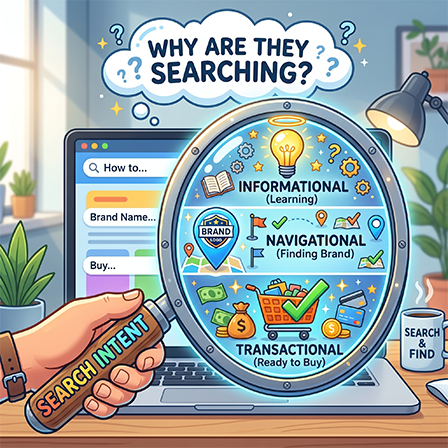
Bonus: Align Your Website With Search Intent
Even the best-designed website won’t convert if you’re attracting the wrong audience.
This is where search intent and SEO strategy come into play.
Types of intent to consider:
- Informational (learning)
- Navigational (finding a brand)
- Transactional (ready to buy)
Your pages should align with the intent behind the keywords you’re targeting.
Example:
If someone searches “affordable web design Cape Town”
They’re ready to take action and your page should:
- Highlight pricing/value
- Include strong CTAs
- Showcase results
How These Elements Work Together
Here’s the truth: no single element guarantees conversions.
It’s the combination that matters.
A high-converting website:
- Attracts the right traffic (SEO)
- Engages instantly (hero section)
- Builds trust (social proof)
- Guides users (CTAs + UX)
- Performs flawlessly (speed + mobile)
When all these elements work together, your website becomes a 24/7 sales machine.
Common Mistakes That Kill Conversions
Even small issues can have a big impact. Avoid these:
- Vague messaging
- Slow load speeds
- No clear CTA
- Over cluttered
- No trust signals
- Poor mobile experience
Fixing just one of these can significantly improve performance.
Final Thoughts: Design for Conversions, Not Just Looks
A beautiful website is great, but a high-converting website is better.
If your current site isn’t generating leads or sales, it’s not doing its job.
The good news? Most websites don’t need a complete rebuild, just strategic improvements based on:
- User behavior
- SEO data
- Conversion principles
Ready to Turn Your Website Into a Conversion Machine?
If you want a website that not only looks great but actually drives results, we can help.


