

Last updated on June 19th, 2025 at 05:08 pm
So, you’ve probably heard of E-A-T (Expertise, Authoritativeness, Trustworthiness) – and no, it’s not about feeding the Googlebot a steady diet of keywords (please don’t try that at home). In SEO-land, E-A-T has been a big deal for years. But wait, Google went and gave E-A-T an extra “E” in late 2022, making it E-E-A-T, which stands for Experience, Expertise, Authoritativeness, and Trustworthiness. In this updated 2025 edition, we’ll go through EEAT in SEO, what that means, why it matters, and how Google’s latest algorithm updates and guidelines have raised the bar (while we raise our eyebrows) on content quality, especially if you’re dabbling with AI-generated content. Buckle up; we’re keeping it conversational, a tad humorous, and extremely up-to-date (promise). Let’s jump in!
E-A-T Gets an Extra E: What’s “Experience” Got to Do with It?
Back in the day (circa 2018-2022), SEO pros worshipped at the altar of E-A-T – Expertise, Authoritativeness, Trustworthiness. These are still the core ingredients of content quality in Google’s eyes. But in December 2022, Google decided that our E-A-T sandwich was missing a little something – an extra slice of “Experience.” They updated their Search Quality Rater Guidelines to introduce E-E-A-T, explicitly adding “Experience” as a factor.
What does “Experience” mean, exactly? In a nutshell, Google wants to know if the content creator has first-hand, real-world experience with the topic they’re writing about. It’s not enough to be an armchair expert; have you been there, done that, got the T-shirt? For instance, Google’s guidelines ask: does the content seem to be produced by someone who actually used the product, visited the place, or personally experienced what they’re describing? If yes, that content gets an uptick in quality. If not, well… it might come off as thin or untrustworthy.
Example: Google itself gives a handy comparison. Suppose you’re looking up how to file your taxes. You probably want advice from an expert accountant (high Expertise). But if you’re searching for reviews of tax software, you’d value the opinions of everyday people who tried those tools (that’s Experience). In other words, certain queries scream for first-hand experience. Google’s addition of the “Experience” factor acknowledges that content written by someone who lived through it can be incredibly valuable for searchers.
In practice, Experience in E-E-A-T shows up as things like: personal anecdotes, original photos or videos from real usage, case studies, or any content that proves “I was there” or “I actually did this.” It’s Google’s way of saying: “Show, don’t just tell.” And it’s been underscored in the quality guidelines ever since that late 2022 update. Not only did E-A-T gain a new letter, but the guidelines also doubled down on encouraging original, helpful content in all its forms – from blog posts to forum discussions – as long as it provides value to people. (Yep, even forum posts from experienced users can demonstrate EEAT. Your random forum rant about a product might actually have SEO value… who knew?)
Oh, and in case you’re wondering: among all these letters, T = Trust is still the most important munchie in the E-E-A-T buffet. Google explicitly says trust is the highest priority. The other elements (Experience, Expertise, Authoritativeness) are like the spices that feed into trust. A content piece doesn’t necessarily need to max out on all four factors to rank, but it absolutely needs to be trustworthy. For example, a product review might derive its trustworthiness mainly from the author’s experience with the item, whereas a medical article better scream expertise (preferably an MD behind it) to be trustworthy. Different strokes, same goal: convince Google and users they can trust what they’re reading.
 How Google Measures “Experience” (EEAT in SEO)
 How Google Measures “Experience” (EEAT in SEO)
You might be thinking, “Okay, Google wants experience. Do I need to start every blog with ‘Trust me, I’ve tried this’?” Not exactly – but you should demonstrate your experience where it counts. Google’s Quality Raters (those are people who manually evaluate search results to help Google understand quality) are trained to look for signs of first-hand experience in content. This could be the author’s bio stating their background, the way the content is written, or the inclusion of personal insights and details that only come from actually doing the thing.
For instance, if you run a cooking blog, a recipe that includes little narratives like “When I made this dish during a family reunion, even my picky aunt asked for seconds” might earn some Experience points – it shows you actually cooked and served it. On the flip side, a recipe that’s clearly just paraphrased from the Wikipedia entry on “how to boil water” (hey, we’ve all seen those) won’t impress anyone at Google HQ.
Google has even built some of this into its Helpful Content system and algorithms. They ask point-blank in their people-first content guidelines: “Does your content clearly demonstrate first-hand expertise and a depth of knowledge (for example, expertise that comes from having actually used a product or service, or visiting a place)?”. If you can’t answer yes, that’s a red flag that you’re skimping on the “experience” factor. In 2023 and beyond, that could mean your content gets outclassed by someone else’s more authentic, been-there-done-that content.
So the takeaway here: whenever possible, inject your personal experience or the experience of known experts into your content. It’s not just a feel-good storytelling tactic – it’s an SEO play now. Google is effectively saying “Don’t just be an expert; be an expert who’s actually gone out and experienced the subject.” Knowledge is great, but knowledge + experience is a winning combo.
And if you’re in niches like health, finance, or legal – the classic YMYL (Your Money or Your Life) topics – E-E-A-T is even more critical. Google holds that content to a higher standard because bad info in those areas can literally harm people’s lives or wallets. An article about home remedies for migraines better come from someone who really knows their stuff (medical expertise) and maybe has personal or clinical experience, and cites trustworthy sources. YMYL content without E-E-A-T is basically playing SEO on hard mode. So don’t do that – bring your A-game instead.
Search Quality Evaluation Guidelines
Fun fact: Google’s own raters have a 181-page manual (the Search Quality Rater Guidelines) where E-E-A-T is mentioned all over. That guide got updated for “Experience” in 2022, and its spirit flows into how Google tweaks its algorithms. Google insists raters’ scores don’t directly change rankings – and that’s true – but the insights certainly shape the algorithm over time. In plain English: pages that would make a rater say “This lacks E-E-A-T” are pages Google likely wants to demote algorithmically. So, align your content with what the raters look for, and you’re basically aligning with Google’s long-term ranking intentions.
Core Updates 2024–2025: Google’s Appetite for Quality Content (E-E-A-T on the Menu)
If the past couple of years had a theme in Google algorithm land, it would be “Helpfulness and Quality or Bust.” Google has been on a warpath against low-quality content, and E-E-A-T is a big part of what “quality” means to them. Let’s talk about those core updates – you know, the big Google algorithm shake-ups that happen several times a year and make SEOs either pop champagne or cry into their coffee.
August 2024 Core Update
The “Helpful Content or Go Home” Update: This one rolled out in mid-August 2024 and was officially described as aiming to “improve the quality of search results by prioritising genuinely helpful content over content that has been created purely to perform well on search.” In other words, if you were churning out pages just to game SEO (the old “write for Google, not for users” trick), August 2024 was likely the month your traffic took a hit.
This update continued the trend from earlier helpful content updates (like the one in Sept 2023) – rewarding people-first content and demoting the junk designed just to snag clicks. Many SEOs noticed that sites with strong E-E-A-T fared better. If your site demonstrated real expertise and experience and wasn’t over-optimized fluff, you probably came out fine or even saw gains. But if you had lots of thin, generic SEO-driven articles, you may have felt like Google tossed them into the compost heap.
March 2024 Core Update
Now, funnily, Google had already fired a warning shot before that, in March 2024. There was a March 2024 Core Update that was all about cracking down on unhelpful, low-quality, and especially unoriginal content. In fact, Google said they brought lessons from their 2022 “helpful content” efforts into this March 2024 update. The goal was to better detect if a webpage is just regurgitating info or if it’s genuinely useful, and to demote the former. How effective was it? Google initially expected this would cut down the amount of “low-quality, unoriginal content” in search by about 40%. After the rollout, they updated that number to 45% less junk in the search results. That’s nearly half of the fluff poof – gone.
Importantly, the March 2024 update explicitly targeted a lot of AI-generated or mass-produced content (the kind that screams “I wrote 100 blog posts in a day with a bot, please rank me, Google”). Google even strengthened its spam policies at the same time, including a policy against “scaled content” abuse – a fancy way of saying tons of auto-generated stuff aimed at manipulating rankings. They weren’t shy about it: if a site was caught using automation to pump out low-quality pages just to rank, that site could get dinged under the spam rules. This update also integrated the Helpful Content system into the core algorithm, taking into account multiple quality signals together. The message was loud and clear: quality or bust. (Side note: A case study after this update found that of a bunch of sites hit with manual actions, 100% had some AI-generated content, and half had almost all content AI-generated. Coincidence? I think not. Google had the AI content farms in its crosshairs.)
March 2025 Core Update
Fast forward to 2025, and the story continues. By this point, Google is doing core updates as routinely as I drink coffee. In March 2025, they rolled out the first core update of the year (and hinted they’ll be doing these updates even more frequently moving forward. Google described the March 2025 update as a “regular update designed to better surface relevant, satisfying content for searchers from all types of sites.” – which is Google-speak for “same mission: reward good stuff, bury crap.” Early observations from the SEO community around that time were telling.
One SEO on Reddit noted in June 2025 that “old, low-quality content is dropping fast” and “AI-generated articles are getting hit unless they’re well-edited.” In other words, pages that might have sat around for years on a site, barely updated and not very helpful, started to sink. Meanwhile, any site leaning too hard on sloppy AI content without human oversight felt the pain too. On the flip side, sites that regularly prune or refresh old content and that put effort into expertly written (or reviewed) material seem to weather these updates better. Experience and expertise for the win again.
To sum up the algo update saga: Google keeps turning the dial up on E-E-A-T and helpfulness. Each core update in 2023, 2024, and 2025 (so far) has reinforced: if you want to rank, you need high-quality, trustworthy, people-centric content. It’s no longer enough to just technically satisfy a search query with a keyword-stuffed page. Google is evaluating how satisfying and trustworthy that result is. Are users happy with it? Is it written by someone who knows their stuff? Does it feel authentic? All that matters.
The key takeaway: Every update is a reminder that E-E-A-T isn’t just an acronym – it’s the closest thing we have to a guiding principle for long-term SEO. If you nail the experience, expertise, authority, and trust in your content, you’re largely future-proofing yourself against these updates. If you ignore those and try to skate by with mediocre content, Google’s core updates will continue to be your personal nightmare fuel.
AI-Generated Content in E-E-A-T: Use Responsibly (Don’t Let the Robots Write unattended)

By now you might be thinking, “This is great and all, but what about AI content? Can I use my friendly neighborhood chatbot to help create content, or will Google smite me for it?” Fair question – AI writing has exploded onto the scene, and a lot of us are using it in some form. Here’s the deal: Google doesn’t ban AI-generated content. Let’s repeat that for the people in the back – Google does not outright ban AI content. In fact, Google has said for years that it cares about the quality of content, not how it was produced. If you use AI to generate helpful, original content, Google’s cool with it. If you use AI to spew out a million low-value pages to game the rankings – not cool (that falls under spam, pal).
In early 2023, Google even put out guidance on this. They basically said: “Using AI is fine as long as the content is helpful and people-first. But if you’re using AI to churn out fluff just to rank, that’s against our spam policies.” They gave examples: AI can assist in good ways (think: automating useful things like weather reports, or helping you write if you then polish it). But if someone just hits “generate 100 articles about keto diets” and slaps them online unedited, that’s the kind of thing their SpamBrain system lives to detect and demote.
The emphasis from Google is always on “people-first” content. In fact, Google’s own advice to creators (which includes you, me, and the AI we rode in on) is: focus on making sure whatever you publish is original, high-quality, and demonstrates E-E-A-T – no matter if AI helped you or not. Quality is quality. They explicitly mention that if you choose to use AI, you should still demonstrate experience, expertise, authority, and trustworthiness in that content. AI is a tool, not a free pass to drop standards.
Another point: transparency. Google encourages being transparent when appropriate about AI involvement. If an AI wrote the first draft and a human edited it, you don’t need to put a huge label saying “THIS WAS WRITTEN BY A ROBOT.” But if it’s the kind of content where a reader might wonder, “hmm, was this written by an AI?”, a brief disclosure can be a good idea. Also, always have a human in the loop. Google’s not fond of fully automated anything if it’s just pumping content. Plus, human review is crucial because AI can mess up facts or subtly plagiarise without you noticing. (The last thing you want is your “helpful” AI article confidently citing wrong information – that’s a fast track to losing trust, and thereby losing rankings and credibility.)
E-E-A-T Best Practices for Using AI
Let’s break down some best practices for using AI content in the age of E-E-A-T, so you get the benefits without the penalties:
-
Keep a Human Editor/Expert in the Loop: Think of AI as your sous-chef, not the head chef. If you have AI draft an article, have a knowledgeable human review and heavily edit it. This ensures accuracy and that the content actually reflects real experience or expertise. Google’s spam policies warn against using AI without oversight just to game rankings. On the flip side, using AI with human expertise guiding it can be okay. The end result should read like it was written by a person who knows the topic – because ultimately it was reviewed by one.
-
Show Your Sources and Credentials: One way to build trust (T in E-E-A-T) is to cite trustworthy sources for facts, stats, or claims – especially if an AI helped generate that info. Don’t let the AI just make stuff up (they do that sometimes, you know, cheeky little hallucinations). Back up important points with links to authoritative sites or studies. And give your content an author byline with some info if possible. Content that provides clear sources and has an actual human author (with expertise) tends to inspire more confidence. Google’s algorithms and quality raters notice that. It’s a simple trust signal.
-
Be Transparent (Don’t Hide the AI in the Closet): If AI played a big role in creating the content, it’s not a sin – you can let your readers know. Maybe a brief note like, “This article was researched with the help of AI and thoroughly reviewed by our editorial team.” This kind of honesty can actually boost trust. Google has said AI or automation disclosures are “useful for content where someone might think ‘How was this created?’”. And while you should definitely list a human as the author, you can mention AI assistance in the editor’s note or so. (Pro tip: Do not list “ChatGPT” or “Bard” as your author – Google specifically advises against giving AI an author byline. They’d much rather see a responsible human taking accountability for the content, with maybe a nod that AI was involved.)
-
Don’t Mass-Produce Drivel: Quantity over quality is a recipe for SEO disaster when it comes to AI. Google’s June 2024 spam update explicitly targeted “AI content generated automatically with the sole intention of improving search rankings.” If you decide to spin up 5,000 crappy articles with an AI and no human TLC, Google’s likely to figure that out and smack your site down (either algorithmically or, if it’s really egregious, via manual action). Use AI to help create better content, not just more content. A few well-researched, well-experienced pieces will beat a mountain of auto-generated fluff every time in E-E-A-T land.
-
Focus on E-E-A-T Signals in AI Content: Make sure even your AI-assisted content oozes experience/expertise. For example, if you’re using AI to draft a how-to article, inject your own experience into it: add anecdotes, tips that came from your real-life trials, etc. Double-check that the tone and facts establish you as an authority. If the AI says something questionable, either cut it or clarify it with expert insight. The end goal: someone reading it shouldn’t be able to tell an AI was involved at all. It should feel human, helpful, and trustworthy. (And as a bonus, you’ll feel more confident about the content you’re publishing, too.)
Remember, Google’s stance boils down to this: “AI-generated content is fine as long as it’s useful, original, and meets E-E-A-T standards. If it’s not, then it’s just spam.” Or in their own words, “If it is useful, helpful, original, and satisfies aspects of E-E-A-T, it might do well in Search. If it doesn’t, it might not.” Pretty straightforward, right?
One more thing – authorship. We touched on it, but it’s worth stressing: always have a real author (or reviewer) associated with your content. By 2025, most savvy sites have an About the Author section, or at least an editorial name on articles. If you’re using AI, you might be tempted to not put a name (’cause who do you credit, the machine? Skynet?). But it’s better to have a human take responsibility. Google’s News and Discover policies, for example, expect clear authorship on content. And generally, content with an identified author who has relevant expertise tends to perform better in E-E-A-T evaluations than anonymous or “admin” authored posts. So give your AI-involved piece a human face.
Keeping Content Fresh: Updating Older Content for E-E-A-T and AI Compliance
Lastly, let’s talk about your old content. Have some articles from 2018 lying around? Maybe a few service pages you haven’t looked at in years? It’s time to show them some love. In the SEO world of 2025, stale or thin content is a liability. Google’s recent updates have been brutal on content that’s old and low-quality. As noted earlier, folks have seen “old, low-quality content dropping fast”. The best remedy is to update and enrich those pages before Google’s algorithm decides they’re compost material.
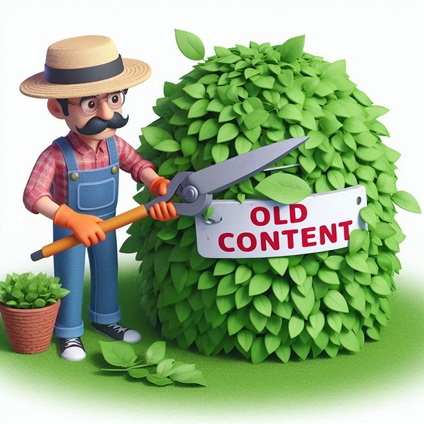 Here are a few quick tips for updating your older stuff with E-E-A-T (and general helpfulness) in mind:
-
Audit for Quality: Go through your older pages and read them as if you were a skeptical user (or Google rater). Do they still hold up? Do they demonstrate experience, or are they generic? Do they cite current sources? Identify the weak ones – thin content, outdated info, or anything that makes you cringe – and put them on the chopping block (or improvement list).
-
Add Experience & Updates: If you wrote something in 2020 and the world has changed (news flash: it has), update the content with the latest info. Even better, add any new first-hand insights you’ve gained. Turn a vanilla article into something more flavorful by injecting a story, a 2025 case study, a pro tip you learned, etc. This boosts the Experience and Expertise quotients instantly.
-
Cite and Tighten: Maybe back in 2019 you could get away with saying “Studies show green tea cures everything” with no link. Not anymore. Add citations to reputable sources for any claims. And tighten up any fluff. Clarity and accuracy build Trust. If an old article was kind of waffly, give it a good edit. Make it snappy, useful, and rich in info. People want proof!
-
Ensure it’s People-First: Ask yourself, “If I landed on this page today, would I be satisfied with the answer/content?” If the answer is “eh, not really,” then rewrite until the answer is “yes!” Remember, if your content leaves users needing to search again for better info, Google definitely does not like that. Every piece should strive to fully answer the query or fulfill the user’s need in a trustworthy way.
-
Prune if Needed: Sometimes, the best update is a consolidation or deletion. If you have ten short articles on similar subtopics, consider merging them into a comprehensive guide. If something is truly obsolete (e.g., “SEO tips for MySpace”), it might be time to let it go. Better to have fewer high-quality pages than many mediocre ones.
Why do all this? Because Google’s core updates and helpful content updates reward freshness and relevance. This isn’t just theory; people have seen recoveries by sprucing up their archives. And logically, it makes sense: Google wants to serve up-to-date, trustworthy info. If your 2017 article about, say, smartphone tech hasn’t been updated, Google’s more likely to rank a 2025 article on the same topic that’s brimming with current info and E-E-A-T signals. Users don’t want outdated advice, and Google doesn’t either. Cause let’s face it, what’s the point? None of that info matters now.
Plus, from a user perspective, updating content shows you care. You’re more likely to get engagement, shares, and even natural backlinks if your content is refreshed and relevant. Those are ancillary benefits that feed back into SEO, too.
In short, treat your old content like a garden: pull the weeds (delete the junk), water the flowers (update good content to be great), and maybe plant some new seeds where needed (new sections, new insights). A well-kept content garden is exactly what Google’s E-E-A-T gardener is looking to reward.
Wrapping Up EEAT in SEO
E-A-T (now E-E-A-T) is here to stay – and it’s more than just a buzzword; it’s a mindset for creating content that actually helps people (what a concept, right?). By ensuring your site demonstrates real experience, solid expertise, authority in its field, and unwavering trustworthiness, you’re not only pleasing some algorithm – you’re also building something of genuine value. Google is simply getting better at telling the good stuff from the garbage.
So, the next time someone asks “What does E-A-T mean in SEO?”, you can tell them: “It means make awesome content that people trust – share your experience, back it with expertise, be authoritative, and don’t lie – and Google will eat it up.”


