

(And What You Should Do Instead)
Artificial intelligence has completely changed how search engines evaluate websites. From AI Overviews and semantic search to answer engines and entity recognition, traditional SEO alone is no longer enough. Yet many businesses still rely on outdated assumptions about AI SEO, and those misconceptions can quietly cost traffic, visibility, and conversions.
If you’re serious about improving online visibility in 2026 and beyond, understanding how AI interprets content is critical. Whether you run a business website, an e-commerce store, or a digital marketing agency, avoiding these common AI SEO myths can help you stay competitive.
Let’s break down the biggest myths.
Table of Contents
Myth #1: “AI SEO Is Just Classic SEO Dressed Up as Something New”
The Reality
While traditional SEO still matters, AI search goes beyond keywords and backlinks. AI systems evaluate:
- Context and semantic relationships
- Entity recognition and topical authority
- Content structure and clarity
- User engagement signals
- Trustworthiness and EEAT factors
AI search engines don’t simply match keywords; they interpret intent. That means a page optimized purely for keywords may rank lower than a well-structured, helpful page even if it uses fewer exact keywords.
Why This Costs Traffic
Businesses stuck in “old SEO mode” often:
- Over-optimise keywords
- Ignore structured content formatting
- Fail to demonstrate expertise
- Miss AI visibility opportunities
This can reduce your chances of appearing in AI summaries, featured answers, or voice search results.
What To Do Instead
Focus on:
- Topic clusters instead of isolated keywords
- Clear headings and structured formatting
- Expert content with real insights
- Consistent internal linking
If you’re unsure where to start, professional affordable SEO services in Cape Town can help align traditional SEO with AI optimisation.
Myth #2: “AI Content Automatically Ranks Better”
The Reality
AI-generated content is everywhere, but quantity doesn’t equal quality. Search engines increasingly prioritise:
- Helpful, accurate information
- Unique insights or experience
- Credibility and trust signals
- Strong editorial oversight
- Humanization
Simply publishing AI-generated articles without human refinement often leads to thin or generic content.
Why This Costs Traffic
Low-quality AI content can result in:
- Reduced engagement
- Lower trust signals
- Higher bounce rates
- Possible ranking declines
Search engines aim to surface content that demonstrates real expertise, not just automated text.
What To Do Instead
Use AI as a tool, not a replacement:
- Add expert commentary
- Include real examples or case studies
- Ensure accuracy and fact-checking
- Improve readability and structure
AI should enhance your workflow, not replace strategic thinking.
Myth #3: “Backlinks Don’t Matter Anymore Because Of AI”
The Reality
Backlinks are still a major credibility signal. However, AI search evaluates them differently:
- Relevance matters more than volume
- Brand authority plays a bigger role
- Contextual mentions count strongly
- Spammy links are easier for AI to detect
AI systems understand relationships between entities, brands, and topics, not just link counts.
Why This Costs Traffic
Some businesses stopped link-building entirely, assuming AI replaced it. Others continued old link-building tactics that now appear manipulative.
Both approaches can:
- Reduce domain authority
- Lower trust signals
- Impact AI recommendations
What To Do Instead
Focus on:
- Quality industry mentions
- Thought leadership content
- PR and brand visibility
- Natural editorial backlinks
- Get into “Top 10” listacles and articles on trusted sites
Authority matters more than ever, but authenticity is key.
Myth #4: “AI Search Has Made Technical SEO Obsolete”
The Reality
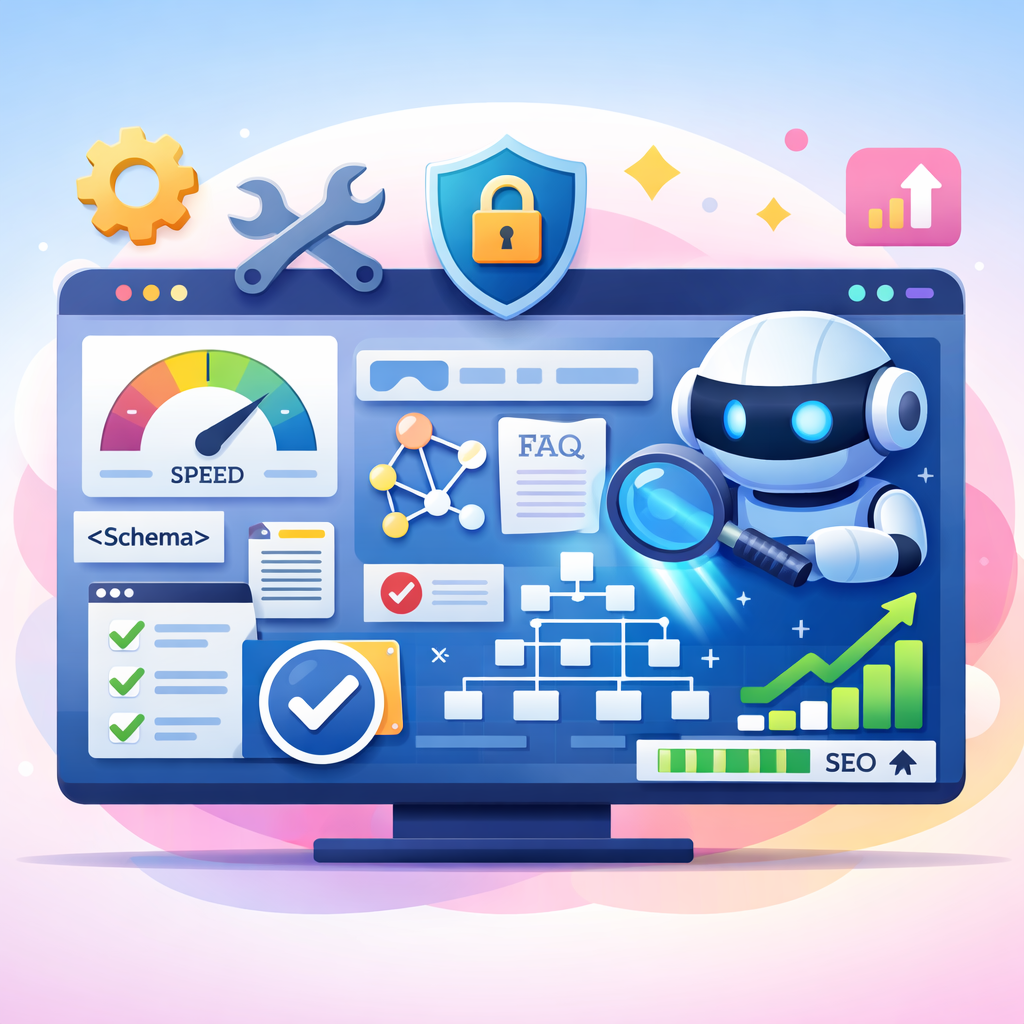
Technical SEO is actually more critical in AI search environments. AI systems rely heavily on structured data, crawlability, and performance signals.
Important factors include:
- Schema markup and structured data
- Mobile performance
- Page speed and Core Web Vitals
- Secure HTTPS connections
- Clean site architecture
Without these, AI may struggle to interpret your content accurately.
Why This Costs Traffic
Technical issues can lead to:
- Poor indexing
- Reduced AI understanding
- Lower visibility in AI summaries
- Missed rich results opportunities
Many businesses invest in content but ignore the technical foundation, a costly mistake.
What To Do Instead
Prioritise:
- Regular technical SEO audits
- Schema implementation
- Speed optimisation
- Security updates
Think of technical SEO as the infrastructure that allows AI to trust and interpret your site. Hire a trusted SEO company to handle this for you, so you can focus on your business.
Myth #5: “AI Search Will Stop People From Visiting Websites”
The Reality
AI Overviews and answer engines do reduce some clicks, but they also create new visibility opportunities.
Websites that:
- Provide authoritative content
- Structure information clearly
- Demonstrate expertise
- Build strong brand signals
are more likely to be cited in AI summaries.
Being referenced by AI can significantly boost credibility and brand awareness.
Why This Costs Traffic
Businesses that assume traffic will disappear often:
- Reduce content investment
- Ignore optimisation
- Miss AI visibility opportunities
Ironically, this makes them less likely to appear in AI search results.
What To Do Instead
Adapt your strategy:
- Create citation-worthy content
- Focus on EEAT principles
- Answer real user questions clearly
- Build topical authority
AI search rewards helpfulness, clarity, and trust.
Quick Summary: AI SEO Myths vs Reality
| Myth | Reality |
|---|---|
| AI SEO = Traditional SEO | AI evaluates context, trust, and structure |
| AI content ranks automatically | Quality and expertise still matter |
| Backlinks don’t matter | Authority signals remain crucial |
| Technical SEO is outdated | It’s more important than ever |
| AI search kills traffic | It creates new visibility opportunities |
Why EEAT Matters More Than Ever
EEAT — Experience, Expertise, Authoritativeness, and Trustworthiness — is central to AI SEO success.
AI systems look for signals such as:
- Author credibility
- Consistent brand mentions
- Accurate, updated content
- Transparent business information
These signals help search engines decide which websites to recommend.
Final Thoughts: Don’t Let AI SEO Myths Hold You Back
As we’ve stated a dozen times at this point, AI search isn’t replacing SEO; it’s evolving and merging. Companies that embrace change early typically secure a competitive edge, while those holding onto outdated thinking may start to lose online visibility.
The key takeaways:
- Blend traditional SEO with AI optimisation
- Focus on credibility and trust
- Structure content for clarity
- Maintain strong technical foundations
- Invest in authoritative, helpful content
If you’d like help navigating AI SEO or improving your site’s visibility, our team is happy to assist.
Feel free to reach out to us at Digital Consulting!
FAQs: AI SEO Myths & AI Search Visibility
What is AI SEO and how is it different from traditional SEO?
AI SEO focuses on how artificial intelligence search systems interpret content. While traditional SEO emphasises keywords, backlinks, and rankings, AI SEO looks more at context, intent, authority signals, structured content, and user experience. It’s about helping search engines understand your expertise — not just matching search terms.
Does AI-generated content rank well in Google and AI search tools?
Not automatically. AI content can rank if it’s accurate, helpful, and well-edited. Search engines prioritise quality, credibility, and real expertise, so human input, fact-checking, and original insights remain essential.
Are backlinks still important in AI-driven search?
Yes — backlinks still signal authority and trust. However, AI search places more emphasis on relevance, brand credibility, contextual mentions, and natural editorial links rather than sheer link volume.
Is technical SEO still necessary with AI search?
Definitely. Technical SEO helps AI systems crawl, interpret, and trust your website. Elements like schema markup, fast loading speeds, mobile optimisation, and secure hosting all support AI visibility.
Will AI search reduce website traffic?
Some informational queries may result in fewer clicks, but strong AI visibility can increase brand awareness, credibility, and future direct traffic. Businesses that optimise properly often see new opportunities rather than just losses.
How do I optimise my website for AI search?
Focus on:
– Clear structured content
– Authoritative, helpful information
– Strong technical SEO foundations
– Consistent brand mentions
– Answering real user questions
This combination helps AI systems interpret your site more effectively.


