

Table of Contents
Keeping Your Brand Visible in the Age of AI Search and Instant Answers
AEO trends continue to change search. Traditional SEO isn’t disappearing; it is evolving. In 2026, more people are getting answers directly from AI assistants, generative search results, voice search tools, and conversational interfaces instead of scrolling through pages of links.
That’s where Answer Engine Optimization (AEO) comes in. It focuses on making your content easy for AI systems to understand, trust, summarise, and recommend.
If your business depends on organic visibility (and most do), keeping up with AEO trends isn’t optional anymore, it’s essential.
If you’re new to this space, you can explore Digital Consulting’s dedicated AI Search Engine Optimization guide.
Now let’s break down the five biggest AEO trends shaping 2026, and what you should do about them.
1. AI Overviews & Zero-Click Answers Will Dominate Search
What’s happening
More and more, search engines are giving users instant answers right on the results page — no extra clicks needed. AI summaries, featured snippets, voice assistants, and chatbot integrations often mean users don’t need to click through to a website. This is what we are calling ‘clickless search’ or ‘zero-click search’.
This doesn’t mean traffic disappears; it means visibility shifts from clicks to mentions, citations, and AI inclusion.
Why this matters
If your content isn’t structured properly:
- AI tools may skip your site entirely
- Competitors could become the cited source instead
- Your brand visibility may decline even if rankings stay stable
How to optimise for this trend
Focus on answer clarity:
- Use clear headings phrased as questions
- Include short answer summaries early in sections
- Add FAQs and structured data where relevant
- Avoid overly complex jargon unless necessary
Think of it like this:
If AI can summarise your content easily, it can recommend it easily.
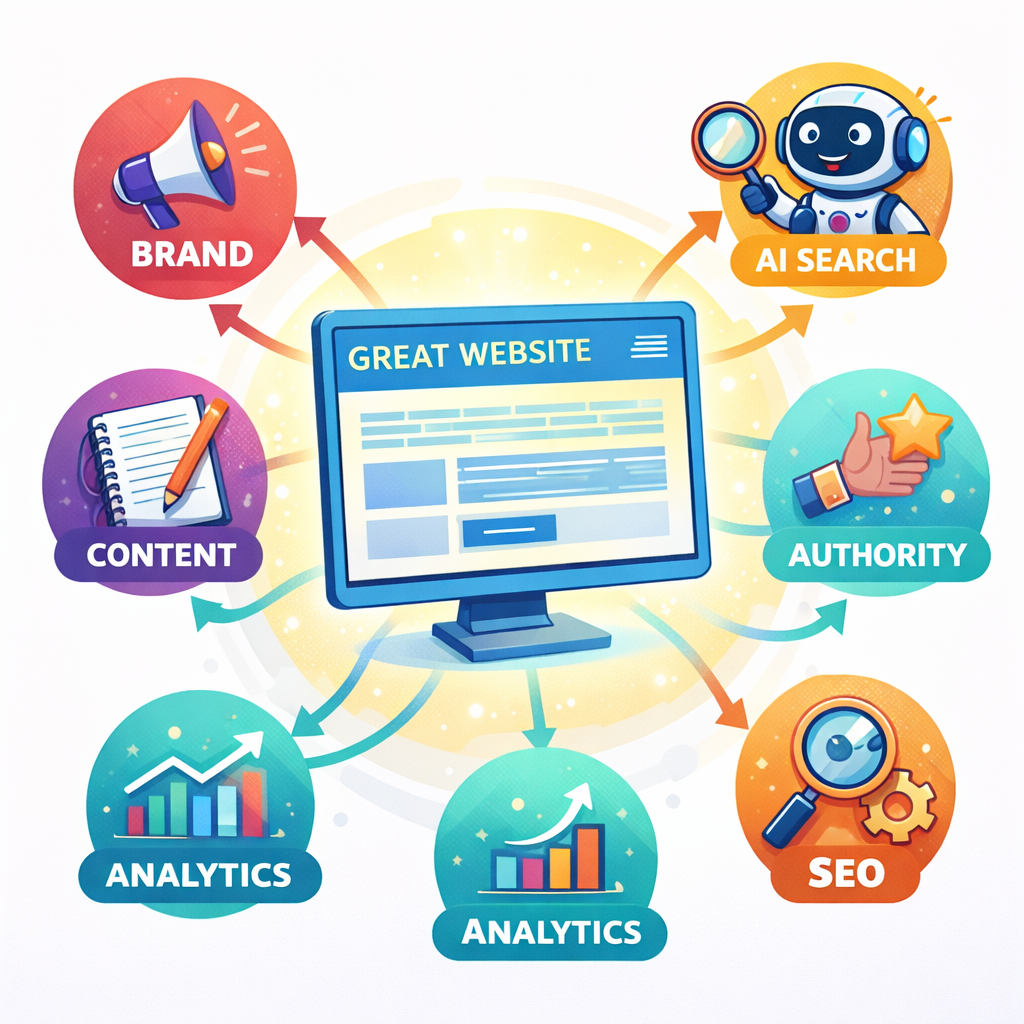
2. Entity-Based SEO Will Replace Keyword-Only Strategies
What’s happening
Search engines now understand relationships between topics, brands, people, products, and concepts. This is known as entities.
Instead of matching exact keywords, AI models evaluate:
- Context
- Authority
- Topical depth
- Semantic relationships
Why this matters
Keyword stuffing or narrow optimization is no longer enough.
In 2026, search engines want to see:
- Topic authority
- Consistent brand signals
- Credible references and connections
How to optimise for this trend
Build topical authority:
- Create content clusters around core topics
- Link related articles internally
- Maintain consistent brand messaging
- Publish expert-driven content
For example, if you offer SEO services, don’t just target one keyword — build content around:
- AI search trends
- Technical SEO
- Content strategy
- Analytics and reporting
This is what we do!
3. EEAT Signals Will Influence AI Recommendations More Than Ever
What’s happening
Experience, Expertise, Authoritativeness, and Trustworthiness (EEAT) are increasingly important not just for rankings, but for whether AI systems trust your content enough to reference it.
AI models analyse:
- Author credibility
- Content accuracy
- Brand reputation
- Consistency across the web
Why this matters
Low-credibility content gets ignored even if it ranks well traditionally.
In AI-driven search, trust equals visibility.
How to optimise for this trend
Strengthen credibility signals:
- Include author bios with credentials
- Add case studies or real experience
- Keep content updated regularly
- Cite reliable sources when appropriate
- Maintain consistent business details across platforms
Also ensure your website has:
- Clear contact details
- Privacy and legal pages
- Transparent service information
These signals help both users and AI systems trust your brand.
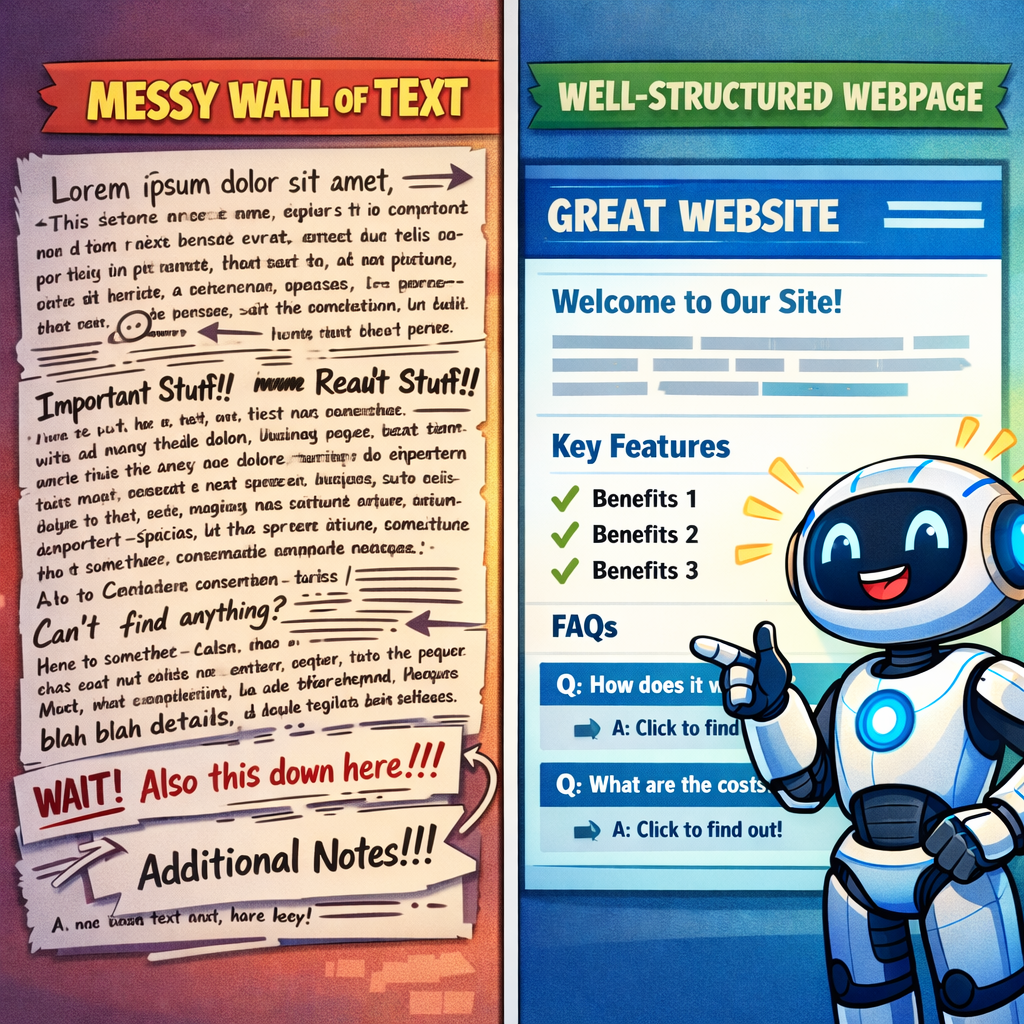
4. Structured Content Will Outperform Long, Unorganised Pages
What’s happening
AI systems prefer content that’s easy to scan, extract, and summarise.
That means:
- Lists
- Tables
- FAQs
- Clear headings
- Logical formatting
Long walls of text without structure often perform poorly in AI summaries.
Why this matters
Even excellent content can struggle if it’s difficult for AI to interpret.
Good structure improves:
- AI extraction
- Featured snippet chances
- Voice search responses
- User readability
How to optimise for this trend
Structure content intentionally:
- Use descriptive H2/H3 headings
- Add bullet points and numbered lists
- Include quick summary boxes
- Keep paragraphs concise
- Add schema markup where relevant
Remember:
Readability isn’t just for humans anymore, it’s for AI too.
This approach improves both traditional SEO performance and AI visibility simultaneously.
5. Multimedia Content Will Become Essential for AI Visibility
What’s happening
AI search engines increasingly process:
- Images
- Videos
- Infographics
- Audio content
- Interactive media
Multimedia helps AI understand context better and often improves engagement metrics.
Why this matters
Text-only websites may struggle to compete in AI-driven environments.
Multimedia supports:
- Rich search results
- Higher engagement
- Improved credibility
- Better user experience
How to optimise for this trend
Diversify your content:
- Add explainer videos
- Use infographics for complex topics
- Include descriptive alt text for images
- Optimise media file names and captions
- Provide transcripts for audio/video
Also ensure media:
- Loads quickly
- Is mobile-friendly
- Doesn’t hurt page performance
Well-optimised multimedia enhances both SEO and AEO simultaneously.
Final Thoughts: AEO Trends Aren’t Replacing SEO
The biggest takeaway for 2026:
SEO and AEO work best together.
Traditional SEO still drives visibility, but AEO ensures your content:
- Gets referenced by AI systems
- Appears in generative answers
- Builds authority beyond rankings
Businesses that adapt early gain a strong competitive advantage.
Those that ignore AI search trends risk becoming invisible, even if their rankings look fine on the surface.


