Zero-Click Searches Rise, Organic Clicks Dip: What It Means for SEO in 2026 Casual, expert, and easy to understand — with EEAT (Experience, Expertise, Authoritativeness, Trust)
Search behaviour continues evolving faster than many marketers expected. Recent data shows a significant rise in “zero-click searches”. These are queries where users find what they need on the search results page without ever clicking through to a website, and a corresponding dip in organic click-throughs to traditional search results. This shift has big implications for SEO strategies, organic traffic, and how we measure success online.
In this blog, we’ll explore what zero-click searches are, why they’re growing, how they’re impacting organic traffic, and what savvy businesses can do to adapt (without panic). Let’s dive in.
What Are Zero-Click Searches?
A zero-click search happens when a user types a query into a search engine, like Google, Bing, or AI-powered search tools, and gets the answer they want without clicking any external link. Instead, the result is delivered directly in the search interface via AI summaries, featured snippets, knowledge panels, or other enhanced result types.
For example, searches for quick facts (“time in Tokyo”), weather, sports scores, definitions, or even some “how-to” answers might show the information right at the top of the results page, no click needed.
The Trend: More Zero-Click, Fewer Organic Clicks
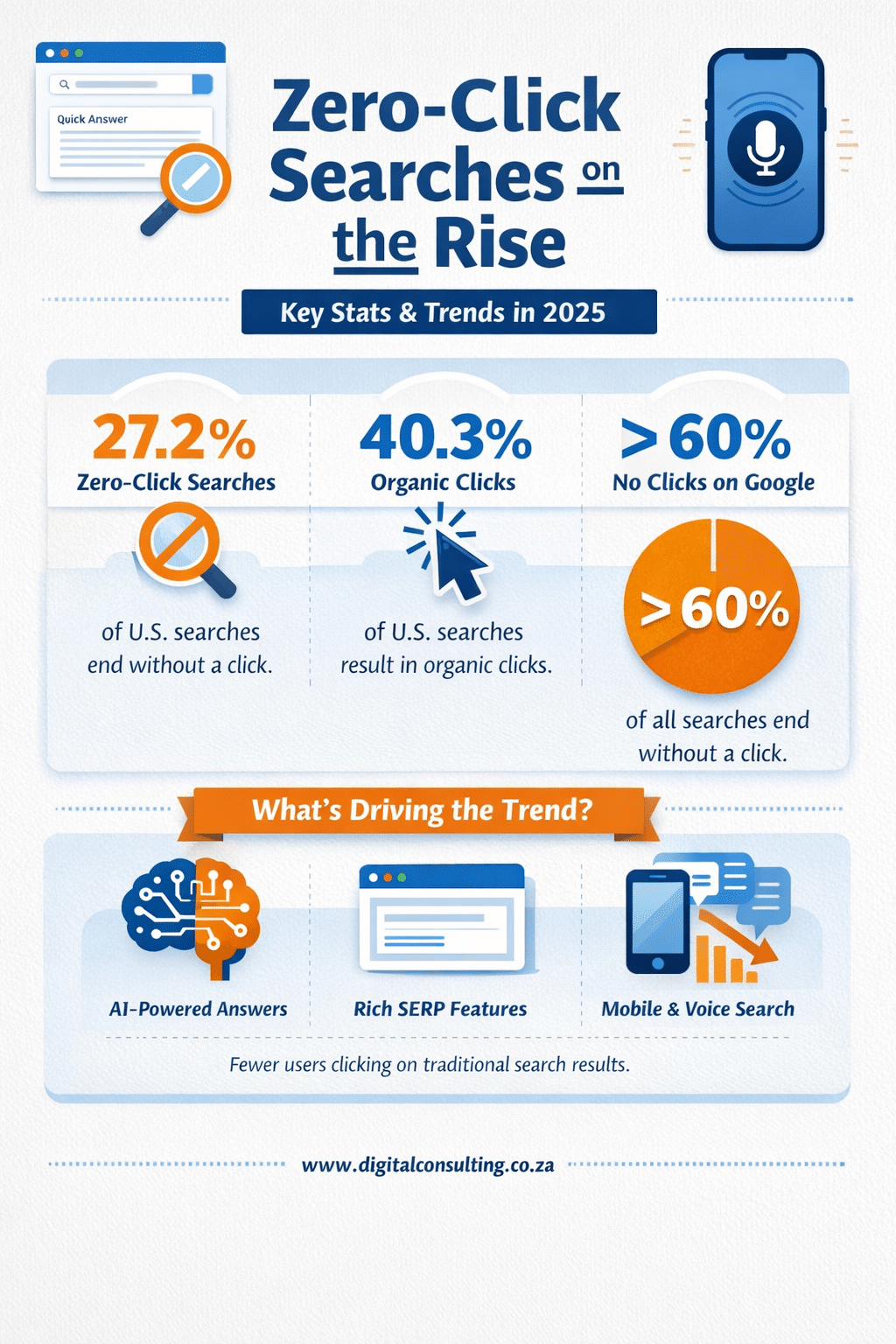
According to a Search Engine Land report, zero-click searches are on the rise. In March 2025, roughly 27.2% of U.S. searches ended without a click, up from 24.4% the year before, and in Europe / the UK the pattern was similar. Meanwhile, the percentage of people clicking on organic results dropped, with only about 40.3% of U.S. searches resulting in an organic click versus 44.2% previously.
Other research takes this even further, suggesting that close to 60% of Google searches now end without a single click to a website. That’s a clear sign that the way people use search has fundamentally changed.
Why is This Happening?
A few overlapping trends are driving the increase in zero-click searches:
1. AI-Powered Answers and Overviews
Search engines are increasingly using generative AI to provide quick summaries or answer boxes at the top of results. These features are designed for speed and convenience, which is great for users wanting fast answers, but challenging for traditional web traffic.
2. Rich SERP Features
Knowledge graphs, featured snippets, local packs, video panels (e.g., YouTube), and carousels all consume real estate in search results. These elements make browsing visually richer, but often reduce clicks to websites.
3. Mobile & Voice Search
As more people use mobile devices and voice assistants, short answers become even more common, and clicks become less necessary.
In short: search engines are increasingly answering queries without needing to send users off to a link. That’s good for immediacy, but it changes the fundamentals of traffic.
What This Means for Organic Traffic
✔️ Declining Click-Through Rates
Even if your pages rank well, they might get fewer clicks. A top-ranking snippet that answers the query directly can “satisfy” the user before they reach your site. This effect has caused noticeable declines in organic click-through behaviour.
✔️ Traffic Shifts Without Ranking Drops
Your site could be ranking high and still not get traffic. That’s because more queries now display answers upfront, especially for informational topics where users want quick solutions.
✔️ Measurement Challenges
Traditional SEO metrics like sessions and clicks become less reliable by themselves. You might see impressions go up but clicks go down, which can make performance look worse than it actually is.
SEO Isn’t Dead, It’s Evolving
Here’s the important bit: SEO is not obsolete, it’s just changing. Organic traffic dips don’t mean content or strategy has failed. Instead, they reflect changes in how traffic and visibility are created. Brands that adapt will still win. Here’s how.
How to Adapt Your SEO Strategy in a Zero-Click World
Whether you’re a business owner, digital marketer, or SEO practitioner, these approaches will help you stay visible and relevant. The new goal, alongside traditional SEO, is brand authority. How recognisable and trustworthy is your brand?
1. Optimise for SERP Features (Not Just Rankings)
Getting into SERP features like featured snippets, definitions, and answer boxes is now just as important as ranking organically. To do this:
Structure content to answer common questions directly.
Use clear headers (H2/H3) that mirror user queries. Think question-and-answer style.
Include concise answers early in the content.
This kind of format helps both search engines and AI interfaces pick up your content as the authoritative answer, even if users don’t click through.
2. Embrace Structured Data & Schema Markup
Structured data (schema) helps search engines and answer engines better understand your content. It increases the chance of appearing in rich results like FAQs, how-to blocks, event snippets, and more, which improves brand visibility.
When users see your brand name in featured snippets, AI answers, or answer boxes, it builds recognition, even if they don’t click immediately. This visibility can lead to direct searches later, social engagement, and better conversion rates overall.
4. Measure the Right Metrics
Traditional click-focused metrics are helpful, but in a zero-click environment, you also want to track:
Impressions in search (how often your page appears)
Zero-click searches are part of a larger evolution in how users interact with information. People increasingly expect instant answers, and search engines and answer engines are delivering them. This is great for usability, but it means digital marketers must think beyond the old model of “rank first, get clicks.”
Zero-click searches rising and organic clicks dipping might feel like bad news, especially if your traffic metrics lean heavily on clicks. But it doesn’t spell the end of SEO. Instead, it’s a clear signal that you need to:
Think in terms of visibility, not just visits
Create content that answers questions directly
Leverage structured data and SERP features
Measure success beyond clicks
Your audience is still searching; it’s just that now, they’re finding answers faster, and sometimes without ever visiting your site. That’s not a failure, it’s a new frontier.
If you want expert help navigating this evolving world of SEO and AI-driven search visibility, reach out now! We’re here to help.
Curious about broader digital strategies or want to explore more? Visit our blog for insights, guides, and services tailored to businesses around the world.
We use cookies to ensure that we give you the best experience on our website. If you continue to use this site we will assume that you are happy with it.