

Table of Contents
First impressions matter, especially online. Your website credibility is an important aspect of your business’s digital image. Research consistently shows that users decide whether they trust a website within seconds. And while content quality is essential, design credibility signals often determine whether visitors stay, convert, or bounce.
In today’s AI-driven search environment, credibility also affects how search engines and AI assistants interpret your brand. Sites that look trustworthy tend to perform better in SEO, AI visibility, and conversion rates.
If you want your website to inspire confidence immediately, whether you’re a small South African business, an eCommerce brand, or a growing international company, these six design elements can make a powerful difference.
Quick Overview: Credibility Design Essentials
If you’re short on time, here are the six elements that instantly boost trust:
- Professional, modern visual design
- Clear navigation and user experience
- Strong trust signals and social proof
- High-quality imagery and branding consistency
- Transparent contact information and business details
- Fast performance and mobile optimisation
Now let’s break each one down with practical tips.
1. Professional, Modern Visual Design
Your website design reflects your brand’s professionalism. An outdated or cluttered design can make even an excellent business seem unreliable.
Why it matters
Visitors subconsciously associate design quality with business credibility. If your website looks neglected, users may assume your service or product quality is the same.
What improves credibility instantly
- Clean layouts with plenty of white space
- Consistent fonts and colour palettes
- Modern UI elements (buttons, icons, spacing)
- Easy readability across devices
A polished design shows that you invest in your business and care about user experience.
If your site hasn’t been updated recently, pairing a redesign with SEO improvements can amplify results.
2. Clear Navigation and User Experience
Even beautiful websites lose credibility if visitors can’t find what they need quickly.
Signs of poor navigation
- Too many menu items
- Hidden contact details
- Confusing page hierarchy
- Slow page transitions
When users feel lost, trust drops fast.
How to improve UX credibility
- Keep menus simple and intuitive
- Use descriptive page labels
- Add clear calls-to-action (CTAs)
- Ensure consistent layouts across pages
Think of navigation as customer service; smooth navigation communicates professionalism.
This also supports AI search understanding. Structured navigation helps search engines interpret your site architecture, improving visibility in AI results. Learn more about AI search optimization.
3. Strong Trust Signals and Social Proof
Nothing builds credibility faster than evidence that others trust you.
Key trust signals to include
- Client testimonials and reviews
- Certifications or memberships
- Case studies and success stories
- Media mentions or awards
- Security badges and privacy assurances
These elements reduce hesitation and reinforce authority.
Pro tip
Place trust signals strategically:
- Near CTAs
- On service pages
- On homepage hero sections
- In footer credibility strips
Even subtle trust indicators can dramatically improve conversions.
4. High-Quality Imagery and Branding Consistency
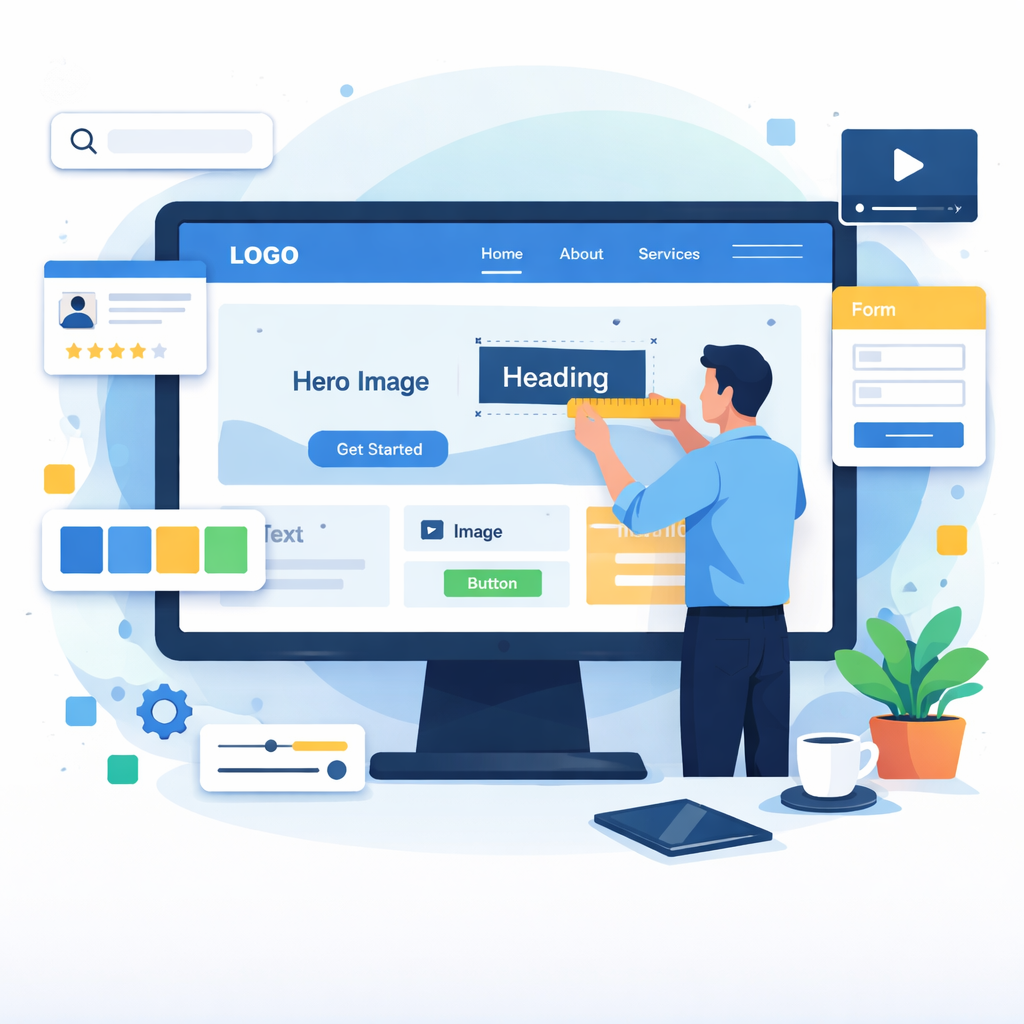
Images strongly influence perceived professionalism. Generic stock photos or inconsistent branding can undermine credibility.
What builds trust visually
- Custom photography where possible
- Consistent brand colours and typography
- High-resolution graphics
- Authentic team or workspace images
Authenticity is particularly important today. AI-generated or generic visuals without context can feel impersonal if overused.
Branding consistency checklist
- Same logo style across pages
- Unified colour palette
- Consistent icon style
- Cohesive graphic themes
Strong visual branding signals stability and professionalism, which are key trust factors.
5. Transparent Contact Information and Business Details
Visitors want reassurance that a real business stands behind the website.
Essential credibility details
- Physical address or service region
- Phone number or WhatsApp contact
- Professional email address
- About page with team or story
- Clear privacy and terms pages
Transparency builds confidence. This reduces friction and increases enquiry rates.
Extra website credibility boosters
- Google Business Profile integration
- Local schema markup
- Business registration details
These also help with local SEO visibility.
6. Fast Performance and Mobile Optimisation
Speed and responsiveness are now core credibility signals.
A slow website feels outdated and unreliable — and users notice immediately.
Performance elements that matter
- Fast loading times
- Mobile responsiveness
- Optimised images
- Reliable hosting
- Secure HTTPS connection
Google and AI search platforms increasingly factor performance into rankings and visibility.
Why speed builds trust
- Faster sites feel more professional
- Users stay longer
- Conversion rates improve
- Bounce rates decrease
If your site feels sluggish, technical optimisation is often one of the quickest credibility wins.
Bonus Tip: Combine Design Credibility With AI Visibility
Today, website credibility isn’t just about human perception; it’s also about how AI interprets your website.
Modern SEO now blends:
- Traditional optimisation
- AI content structuring
- EEAT credibility signals
- Semantic relevance
- Technical performance
If you want your site to appear in AI search results and recommended answers, combining design credibility with AI optimisation is essential.
Common Website Credibility Mistakes to Avoid
Even well-designed sites sometimes lose trust due to small issues:
- Outdated copyright dates
- Broken links or images
- Poor mobile experience
- Thin or generic content
- Missing contact details
- Overuse of intrusive pop-ups
Fixing these often produces immediate improvements.
How Credibility Impacts SEO and Conversions
Credibility influences:
SEO performance
- Lower bounce rates
- Higher engagement
- Better user signals
- Stronger brand authority
Conversion rates
- Increased enquiries
- Higher sales confidence
- Better lead quality
In short: credibility equals visibility plus conversions.
Final Thoughts
Website credibility isn’t built overnight — but the right design elements can improve trust almost instantly.
If you focus on:
- Professional design
- Clear navigation
- Authentic trust signals
- Consistent branding
- Transparent business information
- Fast, mobile-friendly performance
…you’ll create a website that visitors trust — and that search engines and AI systems recognise as authoritative.
And if you’d like expert help improving your website credibility, SEO performance, or AI visibility, you can always reach out to us at Digital Consulting!
